
THANK YOU FOR SUBSCRIBING
× 
Prop Tech Outlook Weekly Brief
Be first to read the latest tech news, Industry Leader's Insights, and CIO interviews of medium and large enterprises exclusively from Prop Tech Outlook


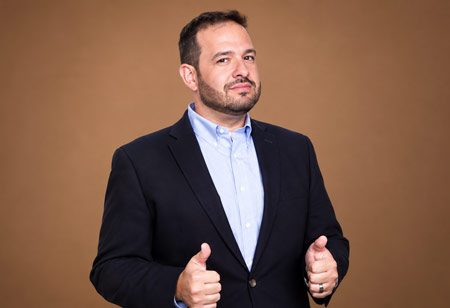
 Ian M Marlow, Founder and CEO
The company grew out of one idea. Owners should be able to run modern buildings without having to become technologists. Twenty-five years later, that idea has hardened into a five-pillar model, managed IT, low-voltage infrastructure, lease administration, accounting and ERP implementation, all under one roof instead of scattered across five vendors.
“We don't wait for problems — we ask the questions clients haven't thought of yet,” says Ian Marlow, founder and CEO.
The five pillars function as one system. ERP implementation anchors the financial and operational platforms owners depend on. Accounting teams keep the recurring financial work moving and lease administration specialists keep every lease document accurate. Managed IT covers corporate offices and property teams alike. Low-voltage specialists handle the connectivity, access control, security and amenity systems that keep a building alive.
“Together, these capabilities eliminate the finger-pointing that arises when multiple providers manage different parts of a portfolio,” adds Marlow.
Supporting Portfolio Change
FITECH’s integrated model becomes especially valuable as portfolios expand, contract or enter new markets. Before an acquisition closes, its teams assess existing technology, estimate operating costs and evaluate whether financial, lease and operating data are ready for migration. When data quality is uncertain, FITECH builds a remediation roadmap before implementation begins.
-
We don't wait for problems — we ask the questions clients haven't thought of yet
Once validated, information moves into the buyer’s environment so billing, rent collection and reporting can begin immediately after closing. Technology teams maintain continuity across access control, video security and amenity systems to ensure ownership changes do not disrupt residents or on site staff. When an asset is sold, FITECH extracts and packages the property’s operational dataset for the buyer while protecting the integrity of the seller’s remaining environment.
Operational demand continues to fluctuate after implementation. Workloads spike around 1099 preparation, lease expirations, tenant onboarding, rights of first refusal, CAM audits and portfolio transactions. Most organizations do not need full time specialists in every discipline, but they do need access to that expertise when workloads rise. FITECH lets owners, developers, brokers and third party managers add fractional or project based capacity without carrying permanent headcount once demand falls.
Operational Continuity at Scale
A multi state real estate owner relied on a single IT leader to manage technology support and building security. When that person left after five years, the owner had no documentation, no backup and several stalled initiatives. FITECH deployed a team to inventory technology across the 20 property portfolio, assess network infrastructure, take over ERP support and immediately absorb the IT ticket volume. Coordinating specialists across its service areas restored operational continuity and removed the client’s dependence on a single individual.
That coordination is one reason client relationships expand over time, often beginning with one or two services before broadening. Operating nationally also standardizes technology across a portfolio. Clients that once purchased different switches, firewalls, access systems and cameras in every market gain centralized infrastructure, something a regionalized approach cannot deliver.
Standardizing Growth Across Markets
FITECH’s capabilities matter now because real estate portfolios are migrating into unfamiliar markets and repositioning across state lines. Standardization has become a growth strategy, not just an efficiency one and it’s the same instinct that has carried FITECH through the years.
The company now runs its own AI programming teams, evaluating which platforms and agents meaningfully improve operations. “Owners shouldn't have to become technologists just to run a modern building,” says Marlow, “We're bridging that gap by asking the questions and then providing real time solutions to those clients with one team, one accountability and no finger-pointing between vendors.”
After 25 years of owners calling FITECH for help and a recent recognition as PropTech Outlook’s Top Real Estate IT Services Provider for 2026, the claim is well supported.
Integrated Real Estate IT without Fragmented Oversight
Real estate technology decisions rarely remain confined to the corporate office. A network change can affect leasing staff at one property while an access control issue interrupts residents at another. ERP data must follow acquisitions and dispositions without delaying rent collection or financial reporting. Yet many owners still manage these responsibilities through unrelated regional vendors, internal specialists and property-level contractors. Each handoff creates another point where accountability can blur.
Portfolio growth magnifies the problem. Acquiring buildings in new markets often introduces different firewalls, access systems and support arrangements. Local decisions may solve an immediate property need but make centralized management harder. Technology costs become difficult to compare and management teams lack a consistent view of what is installed across the portfolio. Real estate IT providers should therefore be assessed on their ability to create repeatable standards without ignoring the conditions of individual assets.
Breadth matters, but only when services work together. Corporate IT support cannot be separated cleanly from the technology inside a building. Leasing offices depend on reliable networks while access control, video security and amenity systems rely on the same infrastructure. ERP platforms also intersect with property accounting and lease data. A provider that covers only one layer may complete its assigned task yet leave the owner coordinating the remaining dependencies.
“FITECH combines managed IT and property technology services with ERP implementation, lease administration and accounting support under one service structure.”
Acquisition and disposition support deserves equal scrutiny. Buyers need an accurate inventory of building systems before closing and a clear estimate of future support costs. Data from the seller must be reviewed, extracted and moved into the buyer’s environment in time for billing and rent collection. During a sale, records must be prepared for transfer without weakening the seller’s continuing business. Providers should have a defined process for these transitions rather than treating each transaction as an isolated technical request.
ERP work introduces another test. Data quality must be examined before migration, not after users encounter missing records or unreliable reports. Some owners can obtain usable exports from their existing platforms. Others require database extraction and a plan for correcting incomplete information. Implementation skill should include this preparation as well as continuing support for custom reports, asset onboarding and system changes after launch.
Staffing flexibility also influences the economics of the engagement. Accounting workloads rise during property onboarding, lease activity and year-end reporting. Third-party managers may need only part of a full-time accounting or IT resource for a given client. Owners face similar swings as portfolios expand or contract. A service partner should be able to add capacity for defined periods without forcing the client to maintain permanent headcount for intermittent work.
Accountability becomes the final dividing line. Multiple specialists often respond to a failed device by redirecting responsibility between the application, network and equipment vendor. Executives should look for a model that reduces those disputes and keeps one party responsible for restoring the working service.
FITECH fits this buying logic through a model built specifically around real estate ownership and property management. It combines managed IT and property technology services with ERP implementation, lease administration and accounting support under one service structure. Its national reach helps owners apply common technology standards across geographically dispersed assets while retaining support at the property level. The model also covers portfolio transitions, ongoing ERP requests and variable back-office workloads. For executives trying to reduce vendor fragmentation without building every specialty internally, FITECH merits focused consideration.
...Read more
Innovation Insights
Real Estate IT Services Info
Q1
What Do Real Estate IT Services Include?
Real Estate IT Services cover the technology capabilities required to support property operations, business continuity, data management, infrastructure and digital workflows. Depending on organizational needs, they can include cloud environments, network support, cybersecurity, enterprise systems, help desk services, technology consulting and building connectivity. The strongest service models connect these functions rather than treating them as isolated projects, helping organizations manage both business technology and the systems that support properties.
Q2
How Does FITECH Deliver Real Estate IT Services?
FITECH delivers Real Estate IT Services through an end-to-end model spanning technology consulting, ERP implementation and support, managed IT, cloud and network services, accounting support, lease administration and smart technology infrastructure. Founded in 2002, it brings real estate and technology expertise together across systems used by organizations and the infrastructure used within properties. Its approach also begins with understanding people, processes and technology before developing solutions aligned with operational and business requirements.
Q3
Why Is Industry Knowledge Important in Real Estate Technology?
Technology in property environments must support specialized operational and financial processes rather than simply provide generic IT assistance. Effective Real Estate IT Services therefore require an understanding of how enterprise platforms, property data, lease information, accounting workflows, building systems and network infrastructure interact. Industry knowledge helps technology teams evaluate existing processes, manage system changes and support implementation without overlooking the operational realities behind the software.
Q4
How Do Real Estate Technology Providers Support System Modernization?
System modernization involves more than replacing an outdated application. Real Estate IT Services can help organizations select and implement platforms, upgrade systems, move data, validate information, configure workflows, create reports and provide ongoing help desk support. A structured approach can help close gaps between legacy processes and newer systems while reducing disruption during the transition. Business intelligence tools can also improve visibility by turning data into reports and dashboards that support better decisions.
Q5
What Should Organizations Look for in an IT Service Partner for Real Estate?
When evaluating Real Estate IT Services, organizations should consider technical depth, industry experience, implementation capabilities and the ability to provide ongoing support. It is also important to understand whether a provider can connect cloud, network, enterprise and building technology requirements. FITECH extends its technology platform into areas such as private encrypted cloud services, ERP support, network and cloud assistance, low-voltage infrastructure and outsourced back-office services, giving customers access to a broader range of connected capabilities.
Q6
How Are Building Technology and Business IT Becoming More Connected?
The boundaries between corporate technology and building technology continue to narrow. Real Estate IT Services increasingly involve secure connectivity, smart infrastructure, IoT readiness and systems that support the way properties are managed and used. For technology to remain useful over time, organizations need infrastructure that can accommodate operational changes and future upgrades. Integrating business systems with building-focused technology can also create greater visibility across physical and digital environments while supporting security and continuity.
Company
FITECH
Management
Ian M Marlow, Founder and CEO
Description
FITECH is a real estate technology and operations services company that supports owners, developers, brokers and property managers through managed IT, ERP implementation, lease administration, accounting and building technology services, helping clients simplify operations and manage growing portfolios through a unified service model.