
THANK YOU FOR SUBSCRIBING
× 
Prop Tech Outlook Weekly Brief
Be first to read the latest tech news, Industry Leader's Insights, and CIO interviews of medium and large enterprises exclusively from Prop Tech Outlook
A featured contribution from Leadership Perspectives: a curated forum reserved for leaders nominated by our subscribers and vetted by the PropTech Outlook Advisory Board.

JBG SMITH
Emphasizing Partnerships Powered by Innovative and Trending Proptech
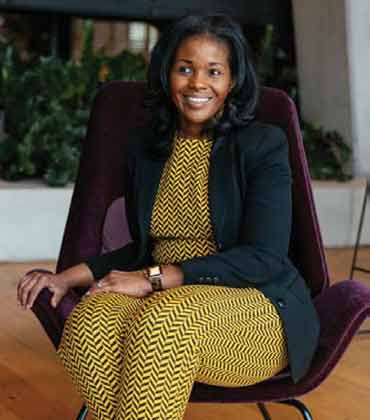
Ebony Landon
In an interview with PropTech Outlook, Ebony Landon, Senior Vice President, Director of Property Operations at JBG SMITH, introduces the new PropTech technology and how it boosts tenant, resident, and owner experiences in the commercial real estate industry.
Could you elaborate on your journey, experience, current roles, and responsibilities?
I am currently a Senior Vice President of property operations and an intermediary between everything onsite at a property and the day-to-day business operations. In particular, I manage master contracts, policies, and procedures for the onsite team and most of the technology deployed on a property.
In my role, I continually research cost-efficient technology implementation methods and leverage my company size to acquire opportunities for partnering with businesses that develop relevant software and technology. Essentially, I am a customer service representative, managing 500-600 onsite clients at our residential, commercial, and retail properties.
What are some of the challenges you see today when it comes to the PropTech space?
From my perspective, PropTech is ever-evolving. But, one of the prominent issues is the saturated and overwhelming market of new ideas and many pandemic-driven PropTech solutions that offer features similar to those already available in the market or a whole lot of nothing. This complicates the decision-making process as you spend most time interviewing, testing, checking, verifying, and validating even small implementations. Moreover, very few providers emphasize fulfilling a customer's simple requirements first. To resolve this, we only need basic solutions where customers can easily access their buildings or parking lots to feel safe.
It's great to have restaurants, coupons, and special discounts on applications, however, we primarily focus on the basics required for commercial real estate and residential spaces. Instead of a bunch of fanfare, we want to provide a consistent experience to our residents and tenants throughout our platform, delivering their needs with precision.
The market technology should be easy-to-use, but the ones I am testing are difficult to manage and maneuver and require additional manpower to back the process, impacting a business’ limited timeframe and budget. In addition, the commercial real estate industry's present situation is different than before, which results in a lack of occupancy.
Our focus as an industry should be employing and attracting customers through ways that make their stay a treasurable experience so they revisit. It should not result in, "Oh! I'm there only Tuesday." "That place is dead!" or "It's boring.” We have to find a solution that makes them stay, and from a technology perspective, create seamless and easy access that enhances their experience when attending parties, free food, ice cream social events, and fun green spaces.
How is technology playing a role to help combat these challenges?
The most positive aspect that we are seeing in technology is the ease of use in access control. We have always looked at security and the ongoing trends in the PropTech world today. For example, I can honestly talk about our partnership with Castle where we spent a great deal of time determining the right technology offerings and providing guidance from an operator and user standpoint about what's valuable to our tenants by considering their feedback.
Alternatively, this space is becoming more and more sophisticated on the commercial and residential side. Back in the day, you needed someone to open a door, access the elevator, or walk around the building to maintain safety. From a security and access control perspective, you now have credentials to enable functions that would otherwise need additional personnel (five years ago). You also have smart cameras that assist in monitoring and sending clips of detected human presence, alerting individuals at a centralized location about the activity in an area. Technology has also boosted access control and security needs.
Another area where I am excited to see technology growth is occupancy and how it can identify people coming in and out of the building using access control software, cameras, and sensors built to detect intruders. These technologies can determine the number of users in a gym, conference center, garage, or lounge and its usage.
10 years ago, it was difficult to understand when you arrived at a parking lot and if there were available spaces. With the new technology, you can pull up to garages and it will alert you to visit the next garage down the block in case of no parking spots. Before, you had to pull in, talk to the concerned personnel person, and back up your vehicle in case of slot unavailability. Now, the technology in the parking world has increased dramatically.
“You can own an older or a newer building, not decked or adorned, technology makes the experience for a tenant or a resident seamless, smooth, and organized”
The other aspect in the automobile field is the electronic vehicles (EV) and charging stations that transformed the technology around garages and other amenities. Being able to extend that is a value added to our tenants. Whether in a residential or commercial environment, when technology becomes valuable, it translates into an asset that attracts customers. You can own an older or a newer building, not decked or adorned, technology makes the experience for a tenant or a resident seamless, smooth, and organized.
Rather than being locked out and dealing with non-functioning devices, the real estate technology sector is reaching a point where people can walk past their doors and it opens automatically. It can contribute to helping residents and tenants looking for optimal experiences alongside other extracurricular amenities.
What is the leadership strategy you and your team follow to achieve your organizational goals?
As smart as technology is, we have to use it smartly. Our goal as a team is to always look for new techniques that leverage technology to save dollars. Our number one priority is to create a great tenant experience cost-effectively. There are many ways to lessen the number of foot patrols with cameras, AC monitoring devices, automatic sensors, and solutions that lower trash costs. For instance, instead of maintaining a routine, your trashcan, dumpster, or compactor notifies you of the pickup time.
Using artificial intelligence is the future, to use it more yet smartly. We do not suggest buying everything off the shelf but believe in trial-testing solutions and piloting economically without overwhelming the team with managing multiple solutions. We begin with finding ways to pilot something in a small enclosed area and not disturb tenants, owners, or residents. In short, we believe in being smart about what, when, and how you deploy a solution.
The other way is looking at opportunities and asking for tenant and resident feedback using experience surveys to create customized experiences for tenants and residents. From heavily populated areas with college students and urban cities with many families, every property and neighborhood is different. It's about creating tailored customer experiences based on the residential or visitors in retail, apartment, or commercial office spaces.
Can you talk about some of the disruptions that might take place in the PropTech space?
There will be a lot of consolidations and mergers among PropTech companies and an industry-wide focus on smart buildings. 10 years ago, smart buildings only included HVAC but, the future will see buildings equipped with mechanical, electrical, and plumbing benefits, access control, automated technology to permit entry and exit from parking garages, and features for fitness and conference centers. It will be a smart and safe building production that uses sustainable technologies to promote healthier spaces, focus on lighting efficiencies, and equip more outdoor lights and sound technologies that help employees concentrate in their workspaces.
The leading technology field has been very isolated despite the many different niches and mechanical, green, and operations focus. It will still manage to create a smart office building. When looking for an efficient space, businesses will seek a smart technology-based environment and technology has the potential to quickly catch up with this demand over the next three to five years.
What would be that one piece of advice you would give your fellow peers to help them tackle these transformational changes and stay at par in their game?
I would say, buckle up, change is coming. It's important for us as colleagues and peers to share our experiences with PropTech companies that innovate technologies. Reciprocating with residents and tenants for feedback to understand their needs and asking shopping center visitors about their demands are necessary. The days of creating and hoping for attraction are over. We need customized experiences and to take the time to work with efficient PropTech companies, producing desired results. Above all, my advice is to collaborate more amongst ourselves and team-up with PropTech businesses.
The articles from these contributors are based on their personal expertise and viewpoints, and do not necessarily reflect the opinions of their employers or affiliated organizations.
