THANK YOU FOR SUBSCRIBING
× 
Prop Tech Outlook Weekly Brief
Be first to read the latest tech news, Industry Leader's Insights, and CIO interviews of medium and large enterprises exclusively from Prop Tech Outlook


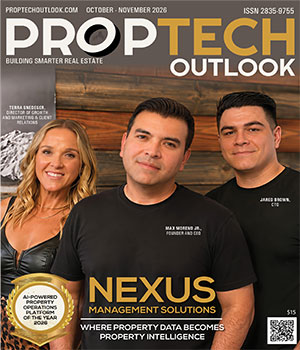
 Terra Snedeger, Director of Growth and Marketing & Client Relations, Max Moreno Jr., Founder and CEO and Jared Brown, CTO
Max Moreno Jr. saw that fragmentation first through irrigation and water management. The discipline depends heavily on data, trends and informed decisions, but similar challenges emerged as he worked with property managers, homeowners associations and commercial property owners. Roofing, landscaping, pools, security, electrical systems and reserve planning were all dealing with disconnected information.
That observation became the foundation for Nexus Management Solutions. Founded in 2023, the company set out to create a connected operating system for property operations, bringing assets, inspections, work orders, vendors and financial planning into one record. For Nexus, asset intelligence rests on three elements: trade-specific knowledge, one operational record spanning inspection through maintenance and financial planning, and role-aware access over one source of truth. That model spans two connected systems, Nexus OS Manage for property managers, HOAs and owners, and Nexus OS ONE for vendors and trade professionals.
“Our vision has always been to create an operating system where property owners retain complete visibility while every vendor works together through one connected ecosystem,” Moreno Jr., founder and CEO.
AI Inside the Workflow
Nexus does not ask users to adopt another AI application or move their information into a separate environment. Instead, AI works within activities teams already perform. A field technician can photograph an asset, an arborist can document a tree, a worker can capture a controller screen and a manager can use AI while preparing a reserve study. The system can interpret that information, propose an answer and provide a confidence score for professional review.
“The best technology is the technology people barely notice because it simply makes their jobs easier every day,” says Jared Brown, CTO.
Our vision has always been to create an operating system where property owners retain complete visibility while every vendor works together through one connected ecosystem.
A field finding can become a work order, estimate or client-facing report without being entered again. The resulting work remains associated with the asset, creating a history that can inform future maintenance and financial planning. An issue can move from inspection to corrective work, through vendor activity and verification, and eventually into the reserve planning process that determines how a future replacement will be funded.
GIS mapping adds another dimension. Assets can be placed on interactive maps as individual points or defined areas and viewed alongside property boundaries and satellite imagery. Managers can see assets by condition or inspection status, while field teams can use the same information on mobile devices. Nexus has onboarded customers with tens of thousands of mapped trees across hundreds of properties, according to the company.
AI capabilities are similarly tied to specific operational tasks. The platform can identify plants, interpret controller screens, analyze photographs and help draft estimate descriptions. Reserve-study analysis can draw on existing asset inventories, photographs, condition histories and work orders to propose useful life, current condition and replacement-cost estimates. Rather than beginning with a blank spreadsheet, the process starts with the property's existing asset data and evidence, giving managers a traceable starting point for financial planning. Those recommendations are accompanied by confidence scores, allowing a manager or reserve professional to assess the result rather than treating an AI output as a final decision. From there, managers can test funding and cash-flow scenarios against reserve requirements rather than rebuilding the analysis from a spreadsheet.
That approach addresses a problem Nexus encountered early in its development. Field teams were often entering the same information multiple times. An inspector might document a problem in the field, only for an office employee to re-enter it into a work order, then into an estimate and again into a client report. The feedback became a core design principle for Nexus. A single field inspection can now flow into a work order, estimate, client-facing report or all three without re-entry.
Nexus also uses AI to transcribe HOA board and management meetings, generate summaries, identify action items and create tasks and workflows that can be tracked through completion.
For customers, data control is part of that equation. Nexus operates as a multi-tenant system with access controls designed to isolate each customer's assets, photographs and financial information from other tenants. The company says customer records are not pooled to train shared models or exposed to other tenants.
Seeing Problems Before They Become Capital Expenses
Water management provides a clear example of how connected data can influence a property decision. Nexus compares actual landscape water use with expected requirements based on factors including local evapotranspiration, plant needs and irrigation efficiency. When a zone is using more water than expected, the system can flag the variance and provide context around its potential cost.
Its agronomic calendar extends the same property-specific approach across the year, helping teams plan irrigation, fertilization, aeration, overseeding, pest control, pruning, mulching and winterization according to seasonal requirements. The resulting records can also support water-conservation and sustainability reporting.
The value of those signals became clear when Nexus identified abnormal water use in an irrigation zone. An inspection found a concealed underground leak that was saturating the soil beneath an asphalt roadway. The issue was not simply wasting water. Continued saturation could have weakened the roadway base and contributed to premature pavement failure.
The example illustrates how property assets are interconnected, with a single irrigation leak affecting water consumption while reducing the lifespan of entirely different infrastructure.
One Record for Owners and Vendors
Vendors do not operate in a silo; their activity becomes part of the property's persistent operational record.Vendor management is another area where fragmented information can create unnecessary work. Property managers need to compare proposals, review historical costs, track vendor performance and verify completed work, but those details are often spread across emails, work orders, invoices and separate reporting systems.
Nexus brings those activities into the property record. Managers can compare proposals, review historical costs, track vendor performance and verify work through locations, timestamps, before-and-after photographs and audit trails. The platform also considers regional labor rates, inflation, CPI trends and historical maintenance costs, giving managers additional context when evaluating pricing and long-term budgets.
-
The best technology is the technology people barely notice because it simply makes their jobs easier every day.
That approach addresses a problem Nexus encountered early in its development. Field teams were often entering the same information multiple times. An inspector might document a problem in the field, only for an office employee to re-enter it into a work order, then into an estimate and again into a client report. The feedback became a core design principle for Nexus. A single field inspection can now flow into a work order, estimate, client-facing report or all three without re-entry.
The platform supports web applications and native iOS and Android applications, along with offline-tolerant field capture. Field teams may be working outdoors, away from reliable connectivity and under conditions where unnecessary data entry quickly becomes a burden.
Rhodes Ranch HOA in Las Vegas offers a broader example of the operational change. Before Nexus, maintenance history, asset tracking and reserve-study information were spread across spreadsheets, email chains and paper records. The association now manages assets, inspections, maintenance history and reserve planning from a central system available to its team in real time.
The company is extending this model through two systems. Nexus OS Manage is designed for property managers, HOAs and ownership groups. Nexus OS ONE, the Operations Network Engine, is built for contractors, vendors and trade professionals.
“Together, these platforms create a connected ecosystem where property owners and service providers collaborate in real time, providing unprecedented transparency, accountability, automation, and operational intelligence,” says Moreno Jr.
Intelligence Built Around the Property
Nexus also takes an industry-specific approach to asset intelligence. Tree workflows incorporate professional arborist standards. Irrigation workflows account for controllers, zones and efficiency. Agronomic workflows account for seasons and plant care.
That specialization matters because a tree does not require the same inspection logic as an irrigation controller, and neither should be treated as a generic line item in an asset database.
Nexus aims to expand beyond landscaping into additional property trades while maintaining a connected record that can accommodate the different professionals working across a property.
 For Moreno Jr., adaptability is as important as the technology itself. Nexus is designed to evolve around each organization's existing operations, workflows and business objectives rather than forcing every customer into the same process. This flexibility is part of the company's long-term customer strategy. Rather than simply providing software, Nexus aims to become an extension of how each organization manages its properties as those needs evolve.
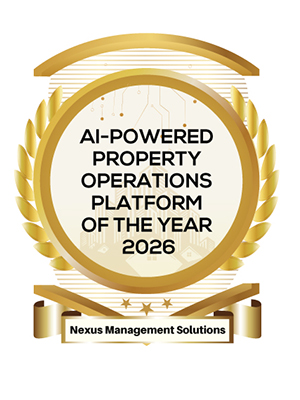
For Nexus, that distinction is central to its AI-Powered Property Operations Platform of the Year 2026 recognition from PropTech Outlook. This reflects how intelligence is embedded in the operating record, allowing property teams to use the information they already collect to guide maintenance, vendor decisions and long-term planning.
Turning Property Data into Actionable Asset Decisions
Property portfolios lose money in the gaps between field notes and management decisions. A technician photographs an irrigation controller, then a board asks for proof of spend after the asset record has drifted somewhere else. The failure is rarely one missed work order. It is the drag created when maps, inspections, work tickets and funding assumptions live in separate places. For HOAs and management teams, AI only matters if it shortens that gap without creating another software project.
Field adoption is where the purchase is won or lost. Property work is done outside, often on phones, under time pressure and sometimes without a steady connection. A platform that asks crews to leave the jobsite rhythm will collect incomplete data, no matter how polished its dashboard looks. Useful AI should sit inside the task already being performed. It can read a controller screen, summarize an inspection note, identify a landscape asset or draft an estimate line, but the user still needs confidence levels and review control. Automation that removes taps is different from automation that asks a team to maintain another system.
Asset visibility becomes the next pressure point. Large sites and dispersed portfolios cannot be managed from static spreadsheets because location changes the meaning of a defect. A failing tree near a walkway may call for a different response than a recurring irrigation issue in one zone, an aging roof component tied to future funding or a pool asset approaching replacement. Buyers should favor software that links each asset to its map position, condition history, photos, work records and financial implications. The practical gain is not abstract visibility. It is fewer version disputes, faster dispatch decisions, cleaner vendor evidence and tighter board documentation.
" Buyers should favor software that links each asset to its map position, condition history, photos, work records and financial implications. "
Finance deserves the same connection to field data. Reserve planning loses accuracy when it is rebuilt from dated assumptions and scattered documents. Better platforms draw from the actual asset inventory, condition evidence, work history and cost benchmarks, then let specialists review the estimates before they shape budgets. Water and landscape planning should be held to the same standard. Meter readings, local weather data, plant requirements and zone performance should point managers toward specific waste, not broad conservation advice. The strongest systems make planning current enough to adjust before costs harden.
Data control is a separate buying issue, not a legal footnote. Property records include photos, budgets, vendor activity and board-sensitive documentation. Multi-tenant software must keep customer records separated and permissioned, especially when AI is involved. Buyers should ask whether data is pooled for model training. They should also know how tenant access is controlled and whether every AI-assisted recommendation leaves a reviewable trail. Trust depends on mechanics, not reassurance.
Nexus Management Solutions fits that buying logic because it keeps AI inside property workflows rather than selling it as a separate layer. Its platform spans asset management, work orders, vendor coordination, AI-enhanced inspections, reserve study analysis, agronomic planning, water intelligence and reporting. Its fit comes through GIS asset mapping, offline-tolerant mobile capture, role-aware access, human approval of AI outputs and data isolation. For property managers and HOA boards that need field evidence to move into work orders, budgets, reports and board documentation without re-entry, Nexus Management Solutions merits consideration as a premier choice.
...Read more
AI-Powered Property Operations Platforms Info
Q1
What Are AI-Powered Property Operations Platforms?
AI-Powered Property Operations Platforms bring property data, field activity and operational decisions into a connected system. Rather than keeping inspection records, work orders, vendor activity and asset histories in separate places, these platforms create an operating record. AI-Powered Property Operations Platforms can also interpret existing information, surface patterns and support decisions without requiring teams to rebuild workflows around a new application.
Q2
How Does Nexus Management Solutions Apply AI To Property Operations?
Nexus Management Solutions was founded in 2023 around the idea of creating a connected operating system for property operations. Its platform brings assets, inspections, work orders, vendors and financial planning into one record. Nexus OS Manage serves property managers, HOAs and owners, while Nexus OS ONE connects contractors, vendors and trade professionals. This structure gives AI-Powered Property Operations Platforms a practical operating context rather than treating intelligence as a separate destination.
Q3
What Problems Can Connected Property Operations Technology Solve?
AI-Powered Property Operations Platforms can reduce repeated data entry, scattered records and delays between field work and office decisions. A field finding can become a work order, estimate or report while staying linked to the related asset. This builds a clear history that teams can use for maintenance and future planning. Offline-tolerant web and mobile applications also let teams capture information when they have limited or no connectivity. This is useful during inspections, repairs and site visits, when work often happens away from a desk. Keeping field information with the property record helps teams follow an issue from the first observation through the next action. It also reduces the need to enter the same information again in a separate office system.
Q4
What Should Organizations Look For In An AI-Powered Property Operations Platform?
Useful AI-Powered Property Operations Platforms should connect intelligence to property records. Important capabilities include asset histories, photographs, inspections, work orders, estimates, reserve data, mapping and role-based access. AI should support professional review rather than replace it. Nexus uses confidence scores with recommendations so a manager or reserve professional can assess the result before using it for funding or maintenance decisions.
Q5
How Can AI Support Property Maintenance And Planning?
AI-Powered Property Operations Platforms can turn property data into useful insights. Nexus can read photographs, analyze controller screens, identify plants and help draft estimate descriptions. Its reserve-study analysis can combine asset inventories, photographs, condition histories and work orders to estimate useful life, current condition and replacement costs. Agronomic workflows track irrigation, fertilization, pruning and other seasonal needs. The platform can also transcribe HOA and management meetings, identify action items and create tasks and workflows. By keeping these activities in the same system, AI-Powered Property Operations Platforms help teams move from one issue or decision to the next step without entering the information into another system.
Q6
How Do AI-Powered Property Operations Platforms Create A Shared Operational Record?
AI-Powered Property Operations Platforms create value when vendors, managers and owners can work from the same property record. Nexus Management Solutions applies this model through asset records that retain locations, inspection history, photographs, condition information, work orders, estimates and reserve data. Its mapping tools place assets alongside property boundaries and satellite imagery, while customer data remains isolated by account. The result is a connected record for maintenance, vendor coordination and longer-term planning.
Company
Nexus Management Solutions
Management
Terra Snedeger, Director of Growth and Marketing & Client Relations, Max Moreno Jr., Founder and CEO and Jared Brown, CTO
Description
Nexus Management Solutions delivers an AI-powered operating system for property operations, connecting assets, maintenance, vendors and financial planning in one intelligent platform. Its connected approach helps property managers, HOAs and owners make faster, smarter decisions while enabling proactive, efficient property management.